
Joining a Coven Versus Practicing Solitary: Finding Your Path to Spiritual Growth

Embarking on a spiritual journey is a profoundly personal undertaking. For individuals aiming to align with their spiritual path, understanding the distinctions between joining a coven and practicing as a solitary practitioner can provide valuable insights. Each approach presents distinct opportunities for growth, connection, and self-discovery.
Embracing Community: The Heart of Joining a Coven
Joining a coven involves stepping into a circle of like-minded individuals. It emphasizes connection, shared rituals, and collective energy. When one becomes part of a coven, they are not merely practicing magic or spirituality in isolation; rather, they are weaving their intentions with those of others, creating a tapestry of support and growth.
In a coven, participants will find:
Guidance and mentorship: Experienced members often assist newcomers in learning traditions and practices.
Shared celebrations: Sabbats, esbats, and other rituals become communal experiences filled with joy and meaning.
Accountability and encouragement: The group dynamic can inspire individuals to deepen their practice and maintain commitment.
Diverse perspectives: Each member contributes unique insights, enriching the collective understanding.
For instance, one may recall their first group ritual, where the energy was palpable and the sense of belonging was immediate. It felt akin to returning home to a family previously unknown. For those who thrive on connection and shared experiences, a coven may serve as the nurturing space they require.

The sacred circle of a coven ritual, inviting connection and shared energy
The Freedom of Solitude: Practicing Alone with Intention
Practicing in solitude offers a unique and transformative experience. It is a journey characterized by self-reliance, introspection, and the establishment of a personal rhythm. When individuals engage in solitary practice, they enjoy the freedom to explore their spirituality without external influences, allowing them to craft rituals and beliefs that resonate uniquely with them.
Solitary practice enables individuals to:
Set their own pace: There are no schedules or group expectations—only personal timing.
Customize their rituals: Every aspect can be tailored to what feels authentic to them.
Deepen self-awareness: Quiet time can be spent reflecting and connecting inward.
Build confidence: Individuals learn to trust their intuition and inner guidance.
Many have found that solitary practice can be incredibly empowering. For instance, one individual recounted an evening spent lighting altar candles and articulating their intentions aloud, which resulted in a profound sense of peace and clarity. This experience serves as a gentle reminder that one's spiritual path is theirs to shape.
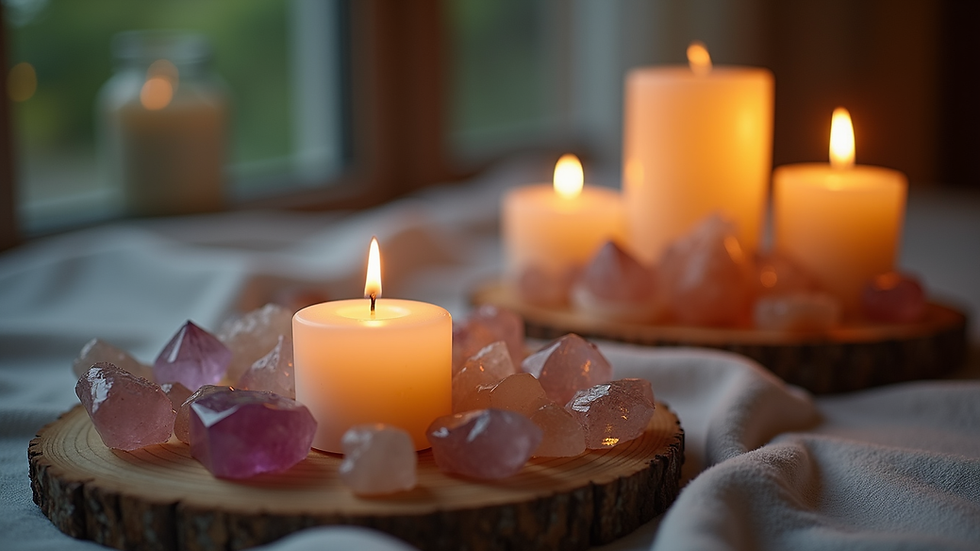
An intimate personal altar, a sanctuary for solitary spiritual practice
Weighing the Pros and Cons: What Feels Right for the Individual?
Choosing between joining a coven and practicing solitary is not a matter of right or wrong; rather, it is about what nurtures personal growth and aligns with individual needs. The following considerations may assist in making this decision:
Aspect | Joining a Coven | Practicing Solitary |
Community | Strong support and shared energy | Independence and self-guidance |
Learning | Structured mentorship and group wisdom | Self-directed study and experimentation |
Flexibility | Scheduled rituals and group decisions | Complete freedom to create one’s own |
Privacy | Less privacy, more openness | Full privacy and personal space |
Accountability | Encouragement to stay consistent | Requires self-discipline |
For individuals who value connection and learning from others, a coven can provide a nurturing environment for growth. Conversely, those who cherish quiet reflection and personal freedom may find that solitary practice serves as their sanctuary.
omeone who values connection and learning from others, a coven can be a beautiful place to grow. But if you cherish quiet reflection and personal freedom, solitary practice might be your sanctuary.
Practical Tips for Exploring Both Paths
If you’re curious about both paths, you don’t have to choose immediately. Here are some gentle ways to explore:
Attend open rituals or workshops: Many covens offer public events where you can experience the energy without commitment.
Start a personal practice: Create a simple altar or daily meditation to connect with your inner self.
Read and research: Books, podcasts, and online communities can offer insights into both solitary and group practices.
Journal your experiences: Reflect on what feels nourishing and what challenges arise.
Be patient with yourself: Your path may evolve, and that’s perfectly okay.
Remember, spiritual growth is a journey, not a destination. You can move fluidly between community and solitude as your needs change.
Finding Your Sacred Space: A Personal Invitation
Whether you find yourself drawn to the vibrant energy of a coven or the quiet depth of solitary practice, the most important thing is to honor your authentic self. Your spiritual path is a sacred dance between connection and introspection, learning and intuition.
I invite you to listen deeply to your heart. What feels like a warm embrace? What calls you to stillness? Trust that your journey is unfolding exactly as it should.
If you want to explore more about aligning with your true self through astrology and psychological insights, consider booking a session with The Temperamental Goddess. It’s a gentle experience designed to support your personal transformation with clarity and compassion.
May your path be filled with light, love, and profound discovery.


Comments